
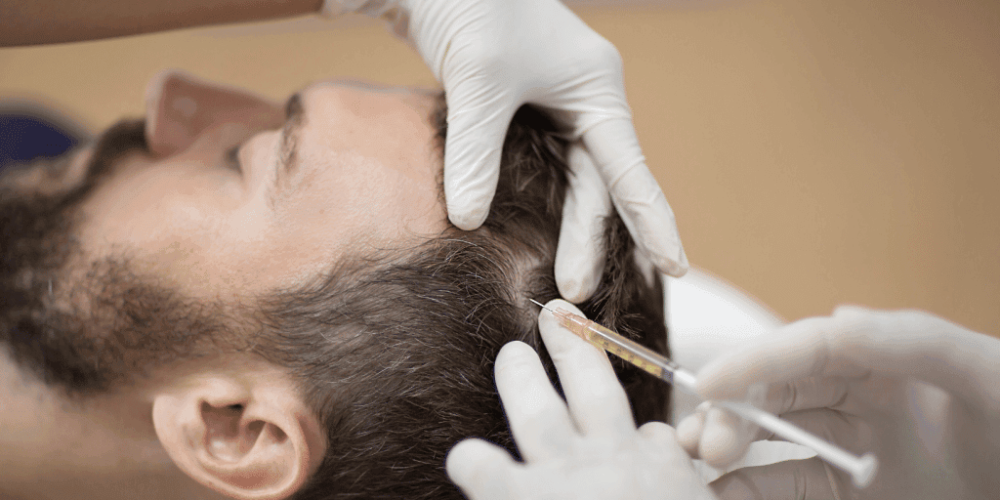
PRP, PRF and exosome products often appear together in hair-restoration discussions, but they are not the same treatment. Understanding the differences can help you ask better questions before paying for a series of procedures.
Start With the Cause of Hair Loss
Gradual pattern thinning, sudden shedding and inflamed or scarred areas need different assessments. A treatment marketed for hair growth may not address the underlying problem. Bring information about when hair loss began, family history, medication changes and scalp symptoms.
The American Academy of Dermatology describes diagnosis as the starting point for treatment. Depending on the findings, evaluation may include examination and selected tests. A consultation should establish whether an injection approach is relevant at all.
How the Three Approaches Differ
Platelet-Rich Plasma: PRP
PRP is prepared from your blood by concentrating platelets in plasma. Platelets contain signaling factors involved in healing. The preparation process and final concentration vary, which matters when comparing research and treatment plans.
PRP has been studied for androgenetic, or pattern, hair loss, including in a randomized controlled trial. That does not establish equal benefit for every cause of shedding or guarantee regrowth for every patient.
Platelet-Rich Fibrin: PRF
PRF is also blood-derived but uses a different preparation and fibrin-based structure. Injectable PRF and other fibrin preparations should not be assumed to have identical composition or effects.
A comparative trial in female pattern hair loss illustrates ongoing research into these preparations. Ask which preparation the clinician proposes and how closely the evidence matches that approach. A newer name does not automatically mean better results.
Exosome Products
Exosomes are extracellular vesicles involved in cell communication. Commercial exosome products are distinct from your own PRP or PRF. The FDA states that no exosome products are FDA-approved. They should not be presented as established substitutes for other hair-loss treatments.
Our exosome evidence and safety guide explains why the source and route of use matter.
Discuss Risks and Alternatives
Blood-derived does not mean risk-free. Ask about discomfort, bruising, bleeding, infection, local reactions and any additives or anesthetic. Share bleeding or platelet disorders, current illness and medicines that affect clotting. Do not stop prescribed medicines without guidance.
Ask how the proposed approach compares with diagnosis-appropriate options such as topical or prescription treatment, and whether dermatology evaluation is needed. Our hair-supplement information covers another category; supplements also require an individual assessment and do not replace diagnosis.
Set Expectations for Follow-Up and Cost
There is no universal package that guarantees a full head of hair. Before starting, ask how response will be documented, when it will be assessed and what would justify further sessions. Consistent photographs can make the discussion more concrete.
Request a current written quote identifying the exact treatment, number of visits, follow-up and any maintenance costs. Do not rely on a generic online price range or assume insurance coverage. Clarify what happens if you do not respond before committing to a series.
Talk With Luxura About Hair Restoration
Contact Luxura Med Spa Chicago to discuss your hair-loss concerns and the appropriate next evaluation. Bring prior diagnoses, treatments and photographs so the conversation can focus on your situation.